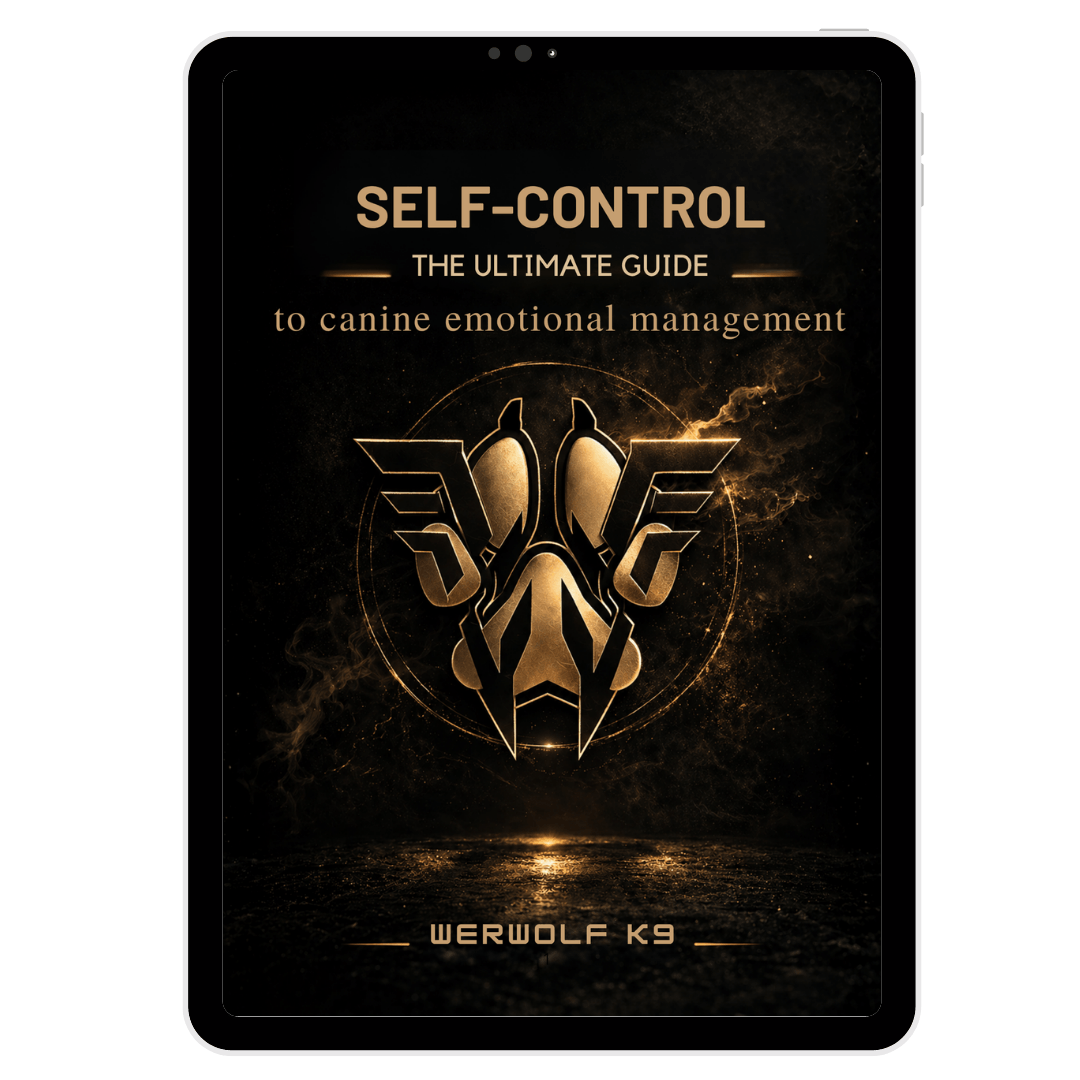
SELF-CONTROL
The ultimate guide
The complete guide to understanding, structuring, and developing your dog’s self-control so you can build a calmer, more stable, more connected dog who can still think under excitement, frustration, or stress.
The problem is not obedience. It is your dog’s ability to manage their emotions.
Many dog owners keep repeating commands, correcting visible behaviors, or trying to distract their dog with food or toys. But if the dog has not learned how to manage their emotional state, they will keep pulling, reacting, chasing, getting overexcited, or ignoring their handler in stimulating environments.
Your dog pulls on the leash
Your dog is unable to control themselves when faced with environmental stimulation.
Your dog reacts
Reactivity is often the result of an emotional state the dog has not learned to manage.
Your dog loses their brain
The dog acts before thinking because they have not learned how to resist their impulses.
This guide works on the root cause
SELF-CONTROL The ultimate guide gives you a clear method to teach your dog how to wait, settle back down emotionally, handle frustration, stay connected to you, and keep their brain switched on in difficult situations.
Self-control
What self-control really means in dogs and why it has such a strong impact on their behavior.
Practical exercises
Structured exercises that teach your dog to settle, wait, think, and manage their impulses.
Into real life
The goal is not to succeed in your living room. The goal is to build a more stable dog in your everyday life.
Why trust Werwolf K9?
I am Daniel Hergott, founder of Werwolf K9. For more than ten years, I worked in high-pressure environments where a lack of discipline, structure, and consistency has immediate consequences. Today, I use that field experience to help dog owners fix problems at the root instead of wasting years on confused methods.
- A well-known dog trainer in France.
- Followed by 1.6 million people.
- Specialized in rehabilitation, self-control, and emotional management.
- A method designed to build a calmer, more stable, more connected dog.
- A French training approach now translated and available in English.
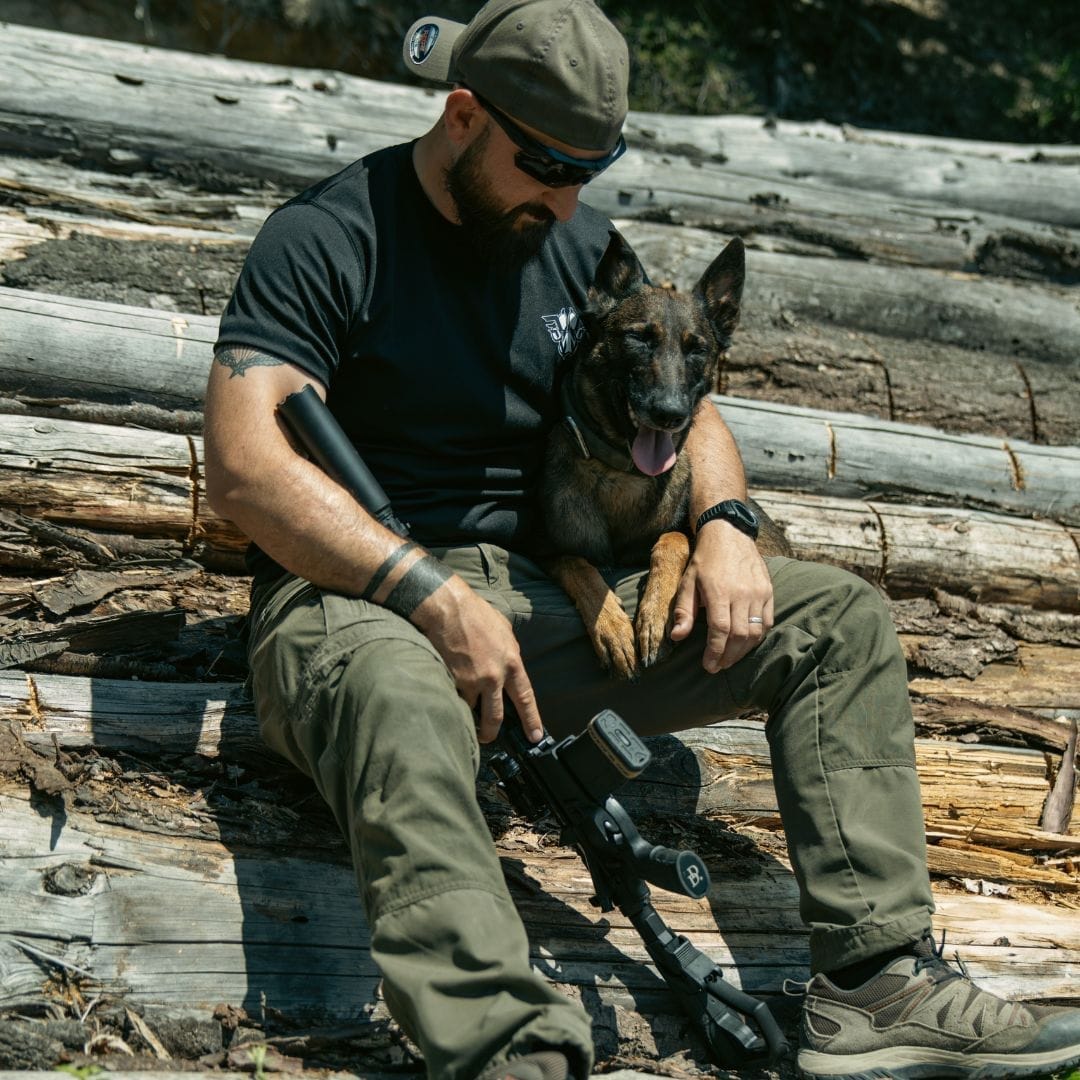
This guide is not empty theory. It comes from real work with reactive, impulsive, overexcited, stressed, and difficult dogs, as well as experience built around working dogs and demanding units.
Werwolf K9 works with prestigious units
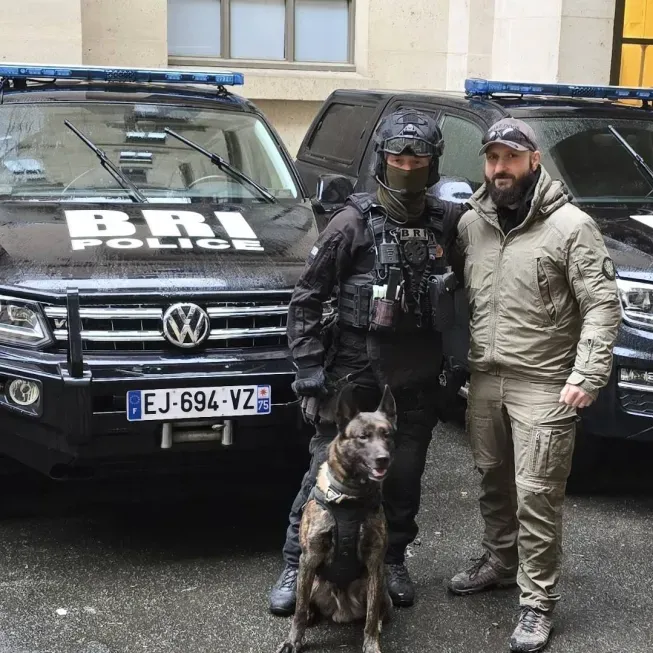
Werwolf K9 works with operational units, professional dog handlers, and demanding organizations. A high-performance dog is not just a dog who obeys. It is a dog who can maintain emotional control in difficult environments.
- Precision-focused work.
- Emotional stability training.
- Real connection with the handler.
- Structured progression.
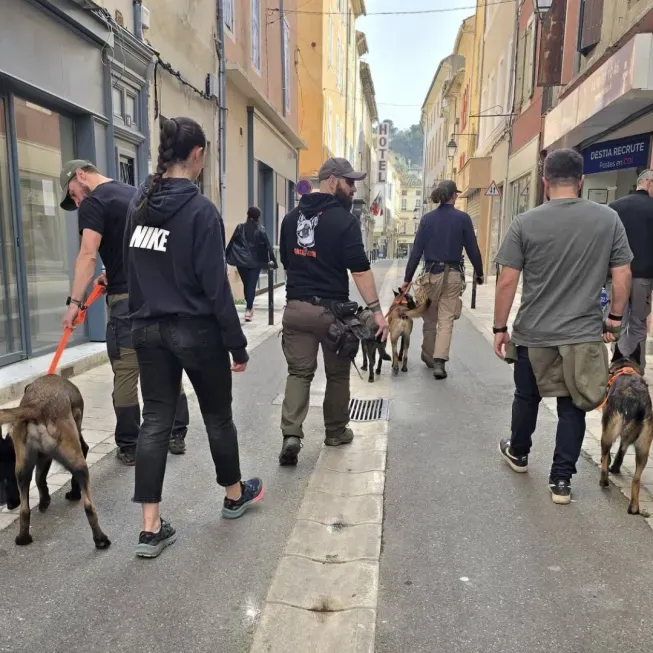
...but also with private dog owners in France
The Werwolf K9 method is not only for professionals. It is also used with private dog owners dealing with reactive, impulsive, overexcited, predatory, or difficult-to-control dogs in everyday life.
- Calmer walks.
- Fewer reactions.
- Better frustration tolerance.
- A calmer dog with a clearer mind.
Browse a few pages
The guide is structured to be clear, practical, and easy to apply. Use the side buttons to move forward or backward through a few sample pages.
A French best-seller now available in English
If you want to stop correcting only the symptoms and start working on the real cause, this guide gives you a clear method to develop your dog’s self-control.